
Visualise this: Solar energy in Nigeria is ending the electricity crisis where the national grid has collapsed 100+ times in 10 years (NERC data), despite massive funding. In a country desperate for reliable power, every blackout feels personal.
During these breakdowns, students read in darkness, small businesses shut down, freelancers miss deadlines, and young entrepreneurs spend their last savings on fuel. In a country where unemployment is already high, an unstable power supply quietly destroys opportunities before they can grow and deepens energy poverty in Nigeria.
Electricity is the engine of modern life.
For Nigerian Youths, these repeated collapses are more than technical failures. They are constant strains to their ambitions, education, livelihoods and hope and a daily reminder of why renewable energy in Nigeria can no longer be treated as an option.
But how long would the average Nigerian user wait for the “cash cows” to rely on the grid again for the Nigerian Electricity crisis to stop? This is not realistic.
By 2026, Nigeria’s solar energy market is projected to surpass 2 billion dollars, driven by chronic grid failures, cheaper imports, and tens of millions of people still living off‑grid. This surge creates a once-in-a-generation chance for tech-savvy Nigerians under 30 to use powerful digital tools like Meta Ads, AI-driven funnels, and no-code platforms to build solar careers in Nigeria and lead Africa’s clean energy transition.
In this article, we’ll look at how the broken grid hurts young people, why solar energy in Nigeria is finally winning on cost, and how Nigerian youth can turn their digital skills into real green jobs in Nigeria and play a leading role in Africa’s clean energy revolution.
Table of Contents
The Boom Opportunity Amid Unemployment Pain
Solar power in Nigeria has become more affordable than grid electricity for the first time. Amid the ongoing Nigerian electricity crisis, grid tariffs have surged to ₦220-₦270 per kilowatt-hour, more than double previous rates. Meanwhile, solar energy in Nigeria and wind systems generate power at just ₦85-₦140 per kilowatt-hour, making renewable energy in Nigeria both cheaper and more reliable than gas plants.
Solar energy in Nigeria added 803 megawatts in 2025, a 141% jump from 2024, making it Africa’s second-largest solar market after South Africa. Cumulative capacity reached 1.19 gigawatts (up from 385 MW), with 96% off-grid, such as rooftop panels, home solar kits, and commercial installations that bypass the failing national grid.
The Nigerian renewable energy market is expected to scale fast from 4.51 GW in 2026 to 14.07 GW by 2031.
Aso Rock confirms solar energy in Nigeria is more efficient and affordable than grid electricity. The State House Medical Centre at the Presidential Villa at Aso Rock has run mostly on solar since May 2025, relying on the grid just 3% of the time. This slashes their ₦47 billion annual electricity bills and ends their dependence on generators. If the Villa can do it, imagine what you can achieve in your community.
Battery storage solves night power. Batteries grew 305%, from 10 MWh to 40.6 MWh, as people demand 24‑hour power, not just daytime solar. Nigeria now drives around 80% of West Africa’s solar growth. Falling panel prices offset naira swings, while high diesel costs push everyone off‑grid. “Solar is now cheaper,” says Adewale Odugbesan of Royal Power & Energy, thanks to new financing models.
This solar boom hits at the same time as youth unemployment tops 40%. Yet the same grid failures are creating a roughly 2‑billion‑dollar Nigerian solar market, so anyone with a phone can start to sell, install and service these systems without waiting for government fixes.
The Digital Edge Solar Bridges
Over 50% of Nigerians, roughly 120 million people, still lack reliable electricity access, a core driver of off‑grid electrification in Nigeria. They spend about ₦5 trillion yearly ($14 billion) on petrol and diesel generators, with 20 GW of small diesel capacity running daily, five times the national grid’s output. This dependence on generators, noise and fumes has made solar energy in Nigeria a practical alternative, not just a climate idea.
Nigeria’s off‑grid solar sector is now one of the world’s largest commercially viable energy‑access markets, driving over 50% of West Africa’s solar appliance sales. USAID estimates about $8 billion annual market potential for solar mini‑grids and $2 billion for solar home systems, making this a huge space for solar businesses in Nigeria. Solar mini‑grids act as decentralised electrical systems that power whole communities through panels and batteries.
This growth is fuelling over 200 local and international solar companies in Nigeria, up from fewer than 20 a decade ago. Many are youth‑led, creating new green jobs in Nigeria in installation, maintenance, sales, clean‑energy finance and tech support.
Africa’s population under 30 will hit 740 million by 2050, and in Nigeria, more than 4 million youth aged 15-34 are unemployed. Yet this generation grew up digital: they run Meta Ads, build no‑code apps, create AI content, code dashboards and design sales funnels. These digital skills make Nigerian youth and clean energy a powerful combination.
These skills bridge the blackout gap. Young people use solar power in Nigeria to keep their own laptops, routers and phones on during outages. That reliable energy unlocks 24/7 online work such as freelancing, working remotely, running ad campaigns, building customer apps, tracking sales data and scaling solar startups in Nigeria.
Solar mini‑grids and home systems need exactly these digital natives: marketers who convert WhatsApp leads, developers who create payment trackers and creators who explain “solar vs gen” savings in TikTok and YouTube videos. The collapse of the grid has created both the market for solar in Nigeria and the young leaders ready to serve it.
Breaking Funding and Trust Walls
Funding Barriers
Nigerian youth who want to build solar businesses in Nigeria face steep financial hurdles. Most lack collateral, land, or strong bank records, so commercial banks reject loan applications outright. Investors and grant bodies typically favour older, “proven” founders over under‑30 entrepreneurs. This blocks many green jobs in Nigeria and ambitious solar careers for Nigerian youth before they even start.
You can still enter the renewable energy in Nigeria space without big loans:
- Zero‑capital entry: Sell solar lamps, phone chargers, or power banks through free WhatsApp groups, Instagram Stories, TikTok and other social media. This is a simple way to start an off‑grid solar business in Nigeria.
- Freelance first: Offer Meta Ads, social media marketing, lead generation services or technical services to existing solar energy companies in Nigeria. You earn income while learning how the solar energy market in Nigeria really works.
Other alternatives to unlock funds include:
- Raising small amounts from friends and family or joining local cooperatives and savings groups.
- Pitching in competitions like Africa’s Business Heroes (deadline April 28, 2026, with up to $300,000 for the top winner).
Apply for youth‑friendly clean energy funding, such as:
- GET.invest Finance Readiness (year‑round support to help early‑stage clean energy startups get investment‑ready).
- Katapult Africa Accelerator (deadline April 25, 2026, investing in climate tech startups).
- Nigeria DARES Mini‑Grid PBG and Standalone Solar grants (first‑come, first‑served support for off‑grid electrification in Nigeria).
Trust Barriers
Even when you have products to sell, customers often see young solar sellers as unreliable “small boy/girl” schemes, especially with so many scams in the solar energy space in Nigeria.
You can change that by:
- Proof: Sharing before/after photos, real customer reviews and 30‑second video testimonials.
- Visibility: Using your real name and face on social media, sharing clear phone numbers and emails, and offering physical pickup points.
- Partnerships: Reselling for trusted solar companies in Nigeria, like Arnergy or Lumos, and joining hubs or associations such as CcHUB or REAN.
- Transparency: Using simple written contracts, clear payment plans and strict delivery and installation timelines so customers feel safe.
This is how you turn funding and trust walls into a launchpad for real solar careers in Nigeria.
Overcoming Skill Gaps and Burnout
Closing Your Skill Gaps
Many young Nigerians already have basic digital skills. You know how to use your phone, create simple designs and move around social media. But if you want to build a serious path in solar energy in Nigeria and access real green jobs in Nigeria, you need to close some clear gaps.
Technical gaps you must close:
- How solar power systems work in detail (panels, inverters, batteries and wiring).
- How to size a solar system for homes and small businesses.
- How to install panels safely and follow Nigerian regulations for renewable energy in Nigeria.
- How power policies work, how to read simple contracts and how to set up a basic business structure (or know when to bring in a trusted accountant or lawyer).
Ways to close these gaps:
- Take short online or physical courses on renewable energy systems, solar basics, sales and customer service.
- Learn through an apprenticeship with an existing solar company in Nigeria or a trusted technician.
- Join communities and hubs where people share knowledge, marketing templates and tips for off‑grid solar business in Nigeria, including lead generation and customer management.
- Add digital and non‑digital skills slowly instead of trying to learn everything at once.
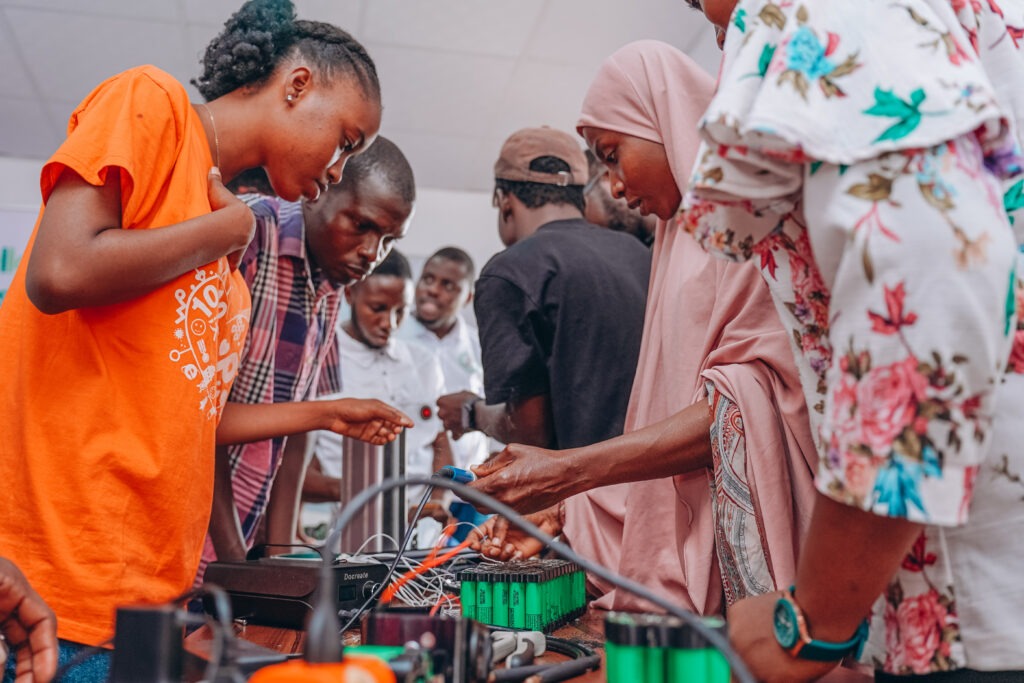
One practical example of this kind of learning path is CEID Hub’s Battery Design and Manufacturing training run with partners like INNOVATE UK, Decibels, ThinkClock and Celloop. The year‑long programme started with a pilot for women and then expanded to youth and women, attracting about 1,200 virtual participants across Nigeria and over 300 in‑person participants from Lagos, Osun and Oyo states. Participants learnt hands‑on skills such as cell processing and sorting, assembly and joining techniques, and battery management system (BMS) installation and configuration. Programmes like this help create a pipeline of renewable energy entrepreneurs who understand both technology and business in the Nigerian solar market.
You can also follow structured digital learning paths like the following:
| Skill Area | Certification | Institution/Platform |
| Freelancing & Digital Skills | Yes | Upwork/LinkedIn Learning/Hubspot |
| DeFi Literacy & Wallet Skills | Badge | Binance Academy / DeFi Africa |
| Renewable Energy Systems | Yes | IRENA or Solar Sister Nigeria |
| Full-Stack Web Development | Yes | ALX, Coursera, or Alt school |
| Blockchain & Smart Contracts | Yes | Ethereum Foundation / Celo Labs |
Table 1: Skills and Institutions to learn digital skills
These skills support solar careers for Nigerian youth in marketing, tech, finance and clean‑energy operations.
Avoiding Burnout While You Grow
If you are juggling school, a job and a side hustle in solar energy or digital skills, burnout is a real risk. Doing too much at once can lead to a lack of focus, low‑quality work and giving up before you build anything solid in the clean energy transition.
Use these simple rules to protect your energy:
- Start with small, clear goals instead of trying to master every skill and launch a full solar installation business in Nigeria at once.
- Use tools to save time, such as social media schedulers, simple design templates and basic automation for messages.
- Work with partners or a small team, so you are not handling marketing, tech, customer care and finance alone.
- Plan short breaks and regular rest when needed.
When you close your skill gaps step by step and manage your energy carefully, you give yourself a real chance to build a sustainable place in Nigeria’s growing renewable energy market and tap into long‑term green jobs in Nigeria.
Next steps for you
After reading this, you might be wondering where to start your journey into solar energy in Nigeria. You can join the solar energy in Nigeria boom, beating 40% youth unemployment:
- Pick one solar skill to learn this week. It could be understanding how a basic solar installation system works or learning how to run ads for solar companies if you are more interested in marketing than wiring.
- Look online for solar installer groups in Nigeria on WhatsApp, Telegram or Slack and introduce yourself. These communities are often where real solar careers in Nigeria begin.
- Talk to one local solar installer and ask how you can help with marketing, content or customer outreach or assist them for free to learn the ropes of the off-grid solar business in Nigeria.
- Write down a simple solar business idea, maybe selling solar lamps, offering installation support or building a payment‑tracking tool, and share it with two friends who might join you as co‑founders.
These small steps might look simple, but they are exactly how you start building skills, confidence and contacts in the renewable energy space in Nigeria.
As the global shift towards renewable energy speeds up, many experts say the solar industry is one of the biggest open doors for young Nigerian entrepreneurs. The head of SMEFUNDS, Dr Femi Oye, explains that this is not just about selling panels. It is about using technology and ideas to build smarter solar solutions that fit how people actually live and work in Nigeria.
He notes that young innovators can build AI‑powered tools that monitor solar systems in real time, spot faults before they happen and guide users on how to get the most power from their panels. They can also design simple digital platforms where homes with extra solar power sell it to nearby neighbours, turning streets and estates into small clean‑energy markets and helping communities depend less on noisy generators and a weak grid.
For this vision to become real at scale, he stresses that it cannot be youth acting alone. Government, private companies and schools all need to play a role by offering practical training, easier access to finance and clear rules that support new solar businesses in Nigeria instead of blocking them. In the end, the call is simple: look for real problems around energy in your area, then use the skills you already have in tech and creativity to build smart, sustainable answers and long‑term green jobs in Nigeria for yourself and others.

- Nigeria’s Solar Energy Boom Fixes Youth Unemployment - May 4, 2026
